
October 14, 2026
The Therapy We Can’t Afford to Lose

By Lauren Tilghman
As more people live longer and seek greater independence, connection, and quality of life, the need for professionals who can support those goals continues to grow. Across human services, long-term care, rehabilitation, and community-based settings, one profession deserves greater attention – recreational therapy.
Recreational therapists use activity-based interventions to support physical, cognitive, emotional, spiritual, and social well-being. Through adaptive sports, creative arts, technology, community integration, and other individualized approaches, they help people maintain abilities, build independence, and work toward meaningful treatment goals.
Demand for that expertise is increasing even as the training pipeline shrinks. Only about 43 U.S. colleges and universities offer bachelor’s level programs in therapeutic recreation or recreational therapy. Meanwhile, the U.S. Bureau of Labor Statistics estimates that about 16,100 recreational therapists were employed nationwide in 2024, with roughly 1,300 openings projected each year through 2034. Hospitals employ 43% of the profession, while nursing and residential care facilities account for another 21%.
Jacob St. Laurent, one of Inglis House’s newer recreational therapists, summed up the disconnect: “We are in much higher demand than people realize.” Having previously worked as the only recreational therapist at another facility, St. Laurent has seen firsthand how longer lifespans and growing long-term care needs are increasing demand. Yet educational options continue to narrow; Temple University stopped accepting new students into its Recreational Therapy Bachelor of Science program after Fall 2024, while the University of New Hampshire paused admissions to its therapeutic recreation bachelor’s option for
the 2026–2027 academic year.
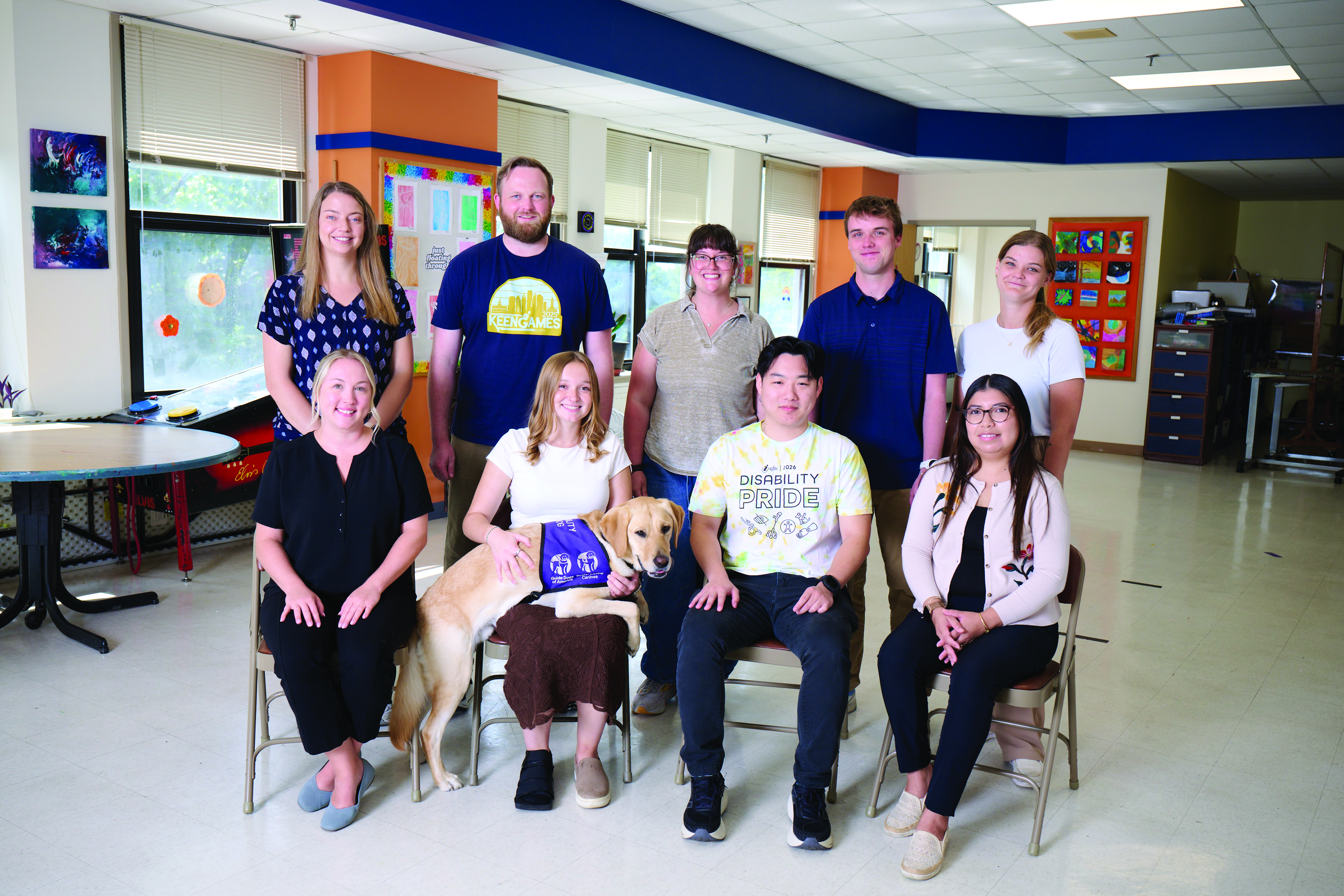
Inglis Therapeutic & Life Enrichment Services Recreational Therapists
For staff, these shifts in programming are alarming. Several of the rec therapists on Inglis House’s Therapeutic and Life Enrichment (TLE) team described discovering the profession only because they encountered it as a named college major. “I don’t know what I’d be doing for work if I didn’t go to Temple because that’s how I found rec therapy,” shared St. Laurent. Allyson Roach, who supports residents’ religious and spiritual programming, worried that without a clearly identified degree path for recreational therapy, “it’s hard to find people.” Their concerns reflect a broader question about who will become the next generation of clinicians if fewer students are exposed to rec therapy in the first place.
That matters because recreational therapy remains widely misunderstood. Grace Wuillermin shared that colleagues in other departments at previous facilities viewed the profession as the “fun department”—people who “just play games and do stuff.” She recalled working with a resident who repeatedly refused to stand during physical therapy. During a recreational therapy session built around a game and social interaction, the resident stood for approximately 30 minutes.
The point was not that recreation replaced physical therapy. It was that meaningful activity created motivation. “She’s socializing, she’s thinking…and there’s all these other things that are involved,” explained Wuillermin. Recreational therapy is clinical work with therapeutic intent and measurable outcomes. Rec therapists in Inglis’ TLE program track engagement, movement, communication, motivation, and changes over time—not simply whether someone attends an activity. “We’re not just having fun,” shared Bowen Chen from Inglis’ assistive technology team. “Of course we’re having fun, but that’s not the only reason.”
Over the years Inglis House has taken a notably different approach than most long-term care facilities. More than 10 recreational therapists work in varying capacities across Inglis House. Instead of treating it as an optional amenity, Inglis integrates therapeutic recreation into residents’ health, independence, technology use, community participation, and daily lives.
At Inglis, donor support helps make community outings and other therapeutic experiences possible. Rec therapists Chantell Hubler and Lindsey LaFountain described the opportunity to try new approaches rather than relying on a limited activity calendar. That same flexibility has also allowed Nancy Cinto and Bowen Chen to transition into assistive technology, and Jeremy Ault to support therapeutic education and help launch a facility dog program.
“That investment reflects a broader philosophy,” explained Jacklyn Monaco, the director of the TLE program; recreational therapy provides “activities to give our lives meaning and to motivate us.” Helping someone find that connection, encouragement, and sense of purpose, she shared, “is what makes the difference.” To Inglis, recreational therapy is a holistic discipline—one that considers quality of life alongside physical, cognitive, emotional, and social goals. As that vision continues to evolve, Inglis is exploring how the same approach could extend throughout its housing communities, creating more opportunities for socialization, engagement, and meaningful activity in the places people call home.
An aging population and a strained workforce are increasing demand for recreational therapy—not making the profession more expendable. As Inglis looks to the future, its continued investment in recreational therapy reflects a simple but powerful belief: helping people stay active, connected, motivated, and engaged in the lives they choose is not an extra in healthcare; it is essential to it.
Learn more about our TLE Program by clicking here.
Support the work of our Recreational Therapists; make a donation by clicking here.