
April 28, 2026
A Promise Built to Last: Preserving Accessible Housing at Inglis
By Lauren Tilghman
or more than five decades, Inglis Housing Corporation has operated with a simple but profound belief that housing is not just shelter—it is the foundation for dignity, independence, health, and opportunity. Long before accessibility was a mainstream consideration in housing design, Inglis was building apartments that recognized the needs of people with disabilities and older adults as essential, not optional.
That commitment dates back to the early 1970s, when Inglis emerged as one of the Region’s earliest providers of intentionally accessible, affordable housing. At a time when most housing stock excluded people with mobility, sensory, or age-related needs, Inglis made a deliberate choice to center access and affordability together. Today, as the City of Philadelphia and the state of Pennsylvania confront intersecting housing shortages, demographic shifts, and aging infrastructure—that legacy is more relevant than ever.
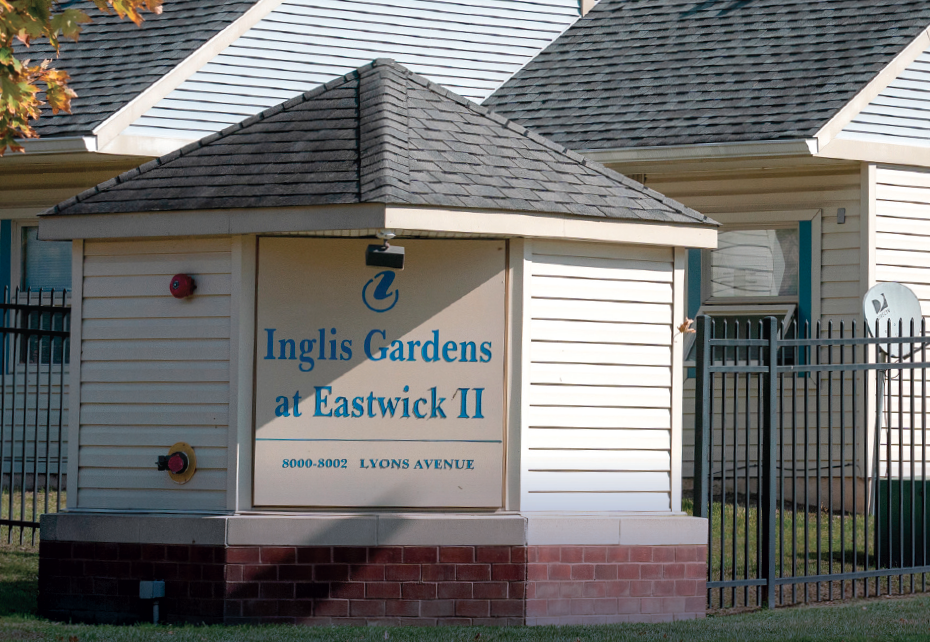
Nowhere is this more evident than in Southwest Philadelphia, where Inglis continues its longstanding stewardship of Inglis Gardens at Eastwick, a 42-unit garden-style community built in 1998 and expanded in 2002. For 30 years, this Community has supported people with disabilities with low incomes who are often priced out of the private market and are underserved by conventional housing models. Inglis is working to preserve them as inclusive, equitable housing within the neighborhood long into the future, thanks to the support of the Philadelphia Housing Development Corporation (PHDC), the Pennsylvania Housing Finance Agency (PHFA), and the Federal Home Loan Bank of Pittsburgh (FHLB Pittsburgh).
Preservation is not just about maintaining the status quo. It is about reinvesting with intention so that accessibility keeps pace with residents’ evolving needs and modern building standards. “We’re committed to building stronger communities that accommodate everyone’s abilities,” shared Heidi Bohn, Executive Director of Inglis Housing Corporation. “Moving forward we want to ensure that our properties exceed basic accessibility and provide services that truly support the wellbeing of each resident that chooses to call our properties home.”
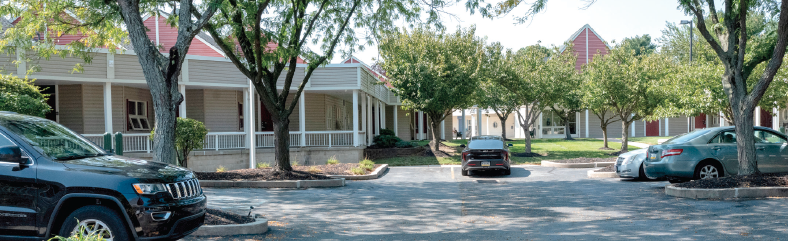
After decades of continuous use, Eastwick, like many similar properties, requires strategic upgrades to its critical building systems, unit interiors, and common spaces. These improvements are essential to extending the useful life of the properties and ensuring that residents can continue to live safely, comfortably, and independently.
This preservation work aligns directly with the City of Philadelphia’s H.O.M.E. Initiative and Pennsylvania’s new Housing Action Plan. Both prioritize safeguarding and reinvesting in existing affordable housing as a core strategy for addressing the housing crisis experienced across the State. The initiative recognizes the reality that it is far more cost-effective— and far more equitable—to preserve deeply affordable housing than to replace it once it is lost. For communities like Eastwick, preservation also adds to neighborhood stability and prevents the displacement of residents who rely on accessible design features that cannot be easily replicated elsewhere.
At the state level, Inglis’ work similarly advances the goals outlined in Pennsylvania’s Housing Action Plan, that emphasizes the need to expand access to affordable homes, while addressing the needs of seniors and people with disabilities, and reinvesting in aging housing stock. The Plan also acknowledges that accessibility must be embedded into housing solutions—not treated as an afterthought, and that longterm affordability depends on proactive capital investment.
Planned improvements for the Eastwick community focus on life-safety systems, accessibility enhancements, energy efficiency, and the modernization of units and shared spaces. Assistive technology—such as modernized intercom and access systems, improved lighting, and wayfinding—will also be incorporated throughout the Properties. Inglis is prioritizing creating infrastructure that can support future smarthome or health-monitoring technologies across all its properties.
Assistive tech plays a critical role in extending independence for so many; it helps Inglis to continue to align housing design with how people truly live in mind and recognizes that accessibility is not static. We are modernizing older developments to meet contemporary needs, and technology helps to bridge that gap.
As policymakers and housing leaders search for scalable solutions to the affordability crisis, Inglis offers a clear example of what works—sustained commitment, thoughtful design, and long-term stewardship. Preserving accessible, affordable housing is not simply about bricks and mortar; it is about honoring a promise made decades ago and ensuring that future generations can age and live with dignity in the communities they call home