
February 20, 2026
Residents at Inglis House among artists whose work has been on display at Bryn Mawr Rehab
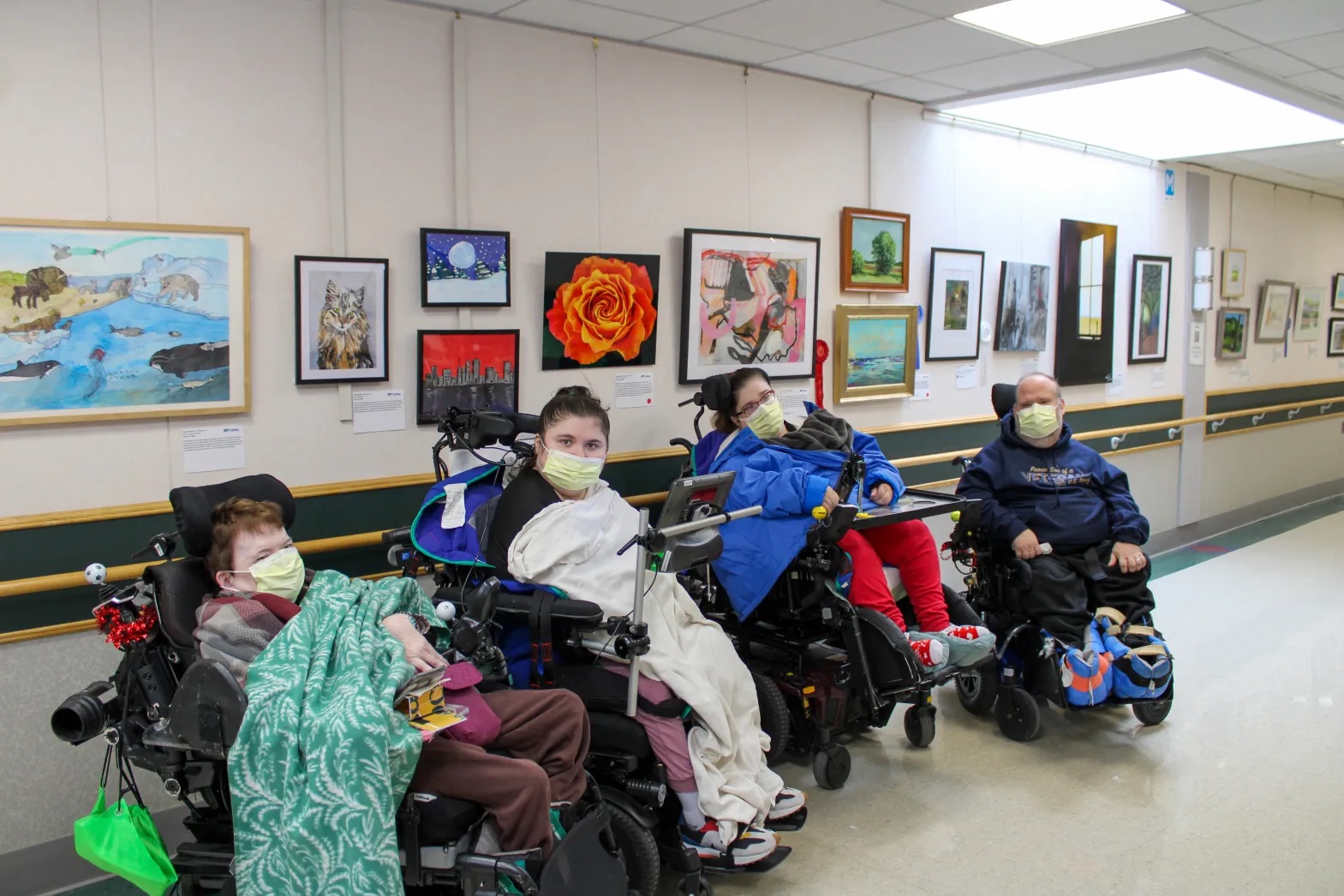
Inglis residents, left to right: Joan Gallagher, Selina Valentin, Natalie Weidner, and Craig Stephens visiting their work at Bryn Mawr Rehab (Photo Inglis House)
MALVERN—Residents of Philadelphia’s Inglis House recently had the opportunity to showcase some of their artwork at Bryn Mawr Rehab in Malvern.
The Art Ability program at Bryn Mawr Rehab offers an accessible venue for artists with disabilities to display and sell their work. The program supports Bryn Mawr Rehab Hospital’s vision and mission to advocate for those with disabilities while advancing the artistic and financial success of artists with disabilities.
Recently several residents of Inglis House, a specialty nursing care facility providing long-term residential care for adults with physical disabilities, had several residents who participated in the Art Ability program with Bryn Mawr Rehab.
Jean George, a resident at Inglis House, is a quadriplegic. George has visited the Louvre Museum in France and the Philadelphia Museum of Art.
A couple of George’s artworks were recently on display on the walls of Bryn Mawr Rehab as part of their Art Ability program.
One of those paintings George submitted was of an eagle to symbolize both the United States and the Philadelphia Eagles.
Although George said she is unable to move her hands, one of the art programs at Inglis House allows someone to help bring her artistic vision to life with her explaining her vision to the person helping her.
At Inglis House, George participates in some of their arts and crafts programs.
George and other residents were recently scheduled to take a bus trip out to Bryn Mawr Rehab to see their work on display, but the recent winter snowstorm canceled it.
Although she wasn’t able to see her work being displayed, she was proud that anyone else walking through Bryn Mawr Rehab could see it.
Lauren Tilghman, director of strategic communications at Inglis House, said Inglis House has been a part of the area for nearly 150 years.
Within Inglis House, they have numerous therapeutic programs, including some very robust art programs.
“For a lot of folks, art has been very therapeutic, not only physically but also mentally and emotionally,” Tilghman said.
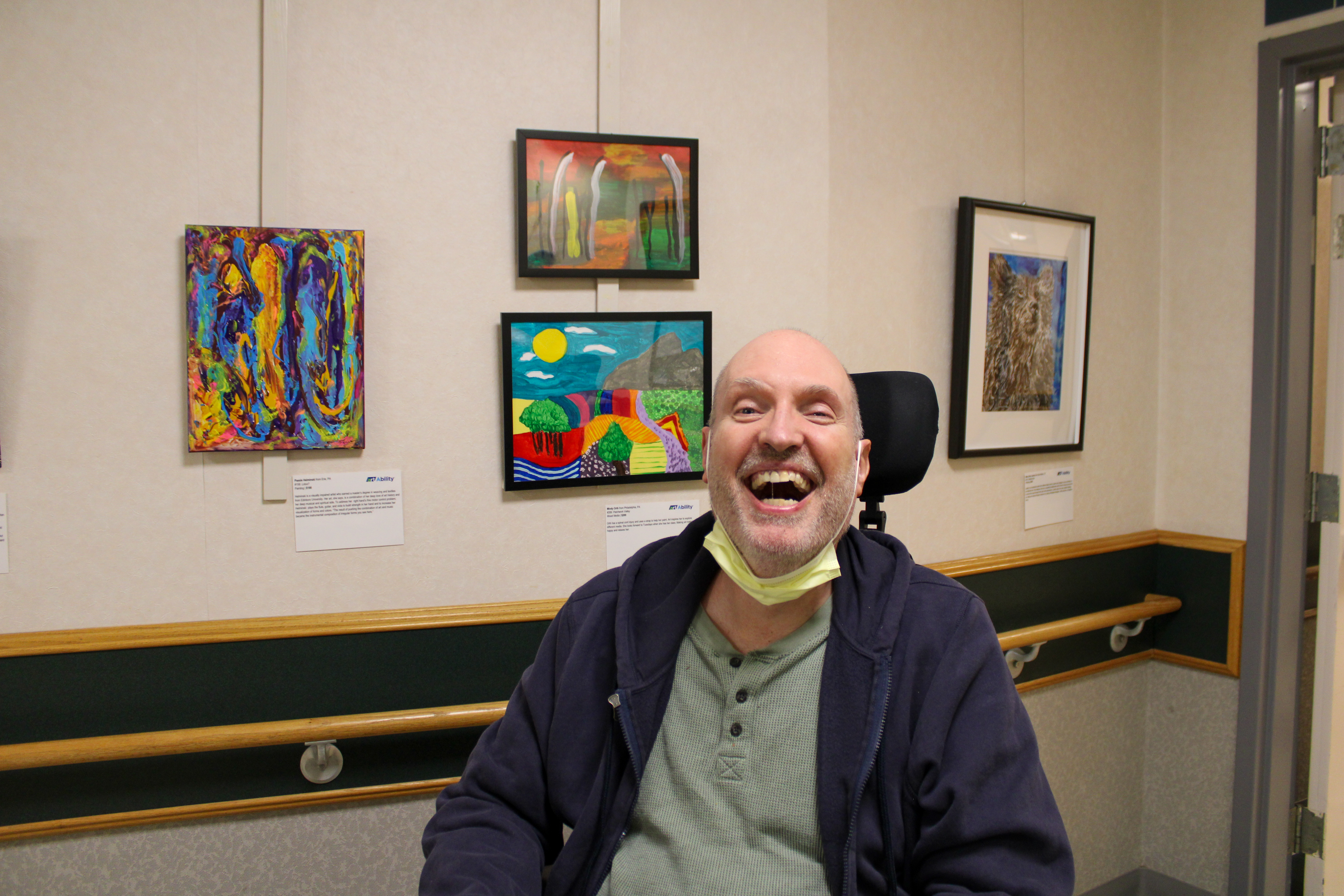
Duncan Campling, Inglis House resident, viewing pieces at Bryn Mawr Rehab’s Art Ability exhibit
There were 17 residents at Inglis House who were selected to participate in the Art Ability program at Bryn Mawr this year.
Although there are different types of art that can be submitted for the Art Ability program, all the artworks submitted this year by Inglis House residents were paintings.
Tilghman said the program has been a significant part of Inglis House residents’ healing journey, and seeing their work on display has been meaningful.
“It’s also a reminder for a lot of folks that they have the ability to be able to do things beyond whatever their diagnoses may have been,” Tilghman said.
Although the trip George was scheduled to take to Bryn Mawr had to be canciled due to the snow, they’ve taken many of the residents who participated in the program on other days.
“People are excited; they are very proud to see their work on display,” Tilghman said. “You can feel the joy when people see their pieces on display, being able to stare at them, being able to take photos with their pieces.”
Erin Panner, program coordinator for Art Ability at Bryn Mawr Rehab, said this year marks the 30th anniversary of the Art Ability program at Bryn Mawr Rehab.
Initially, the program was small, with about 20 or 26 artists with about 75 pieces.
This year, about 170 artists took part with an estimated 400 works of art.
Panner said that to be part of the Art Ability Program, the artist must have a disability.
“We’re a very artist-forward program,” Planner said. “And understanding that a lot of artists have financial barriers that go along with it. So the artist receives 80 percent of the sales price, and 20 percent is retained for special programs and different needs at the hospital.”
The artwork is hung throughout the walls at Bryn Mawr Rehab.
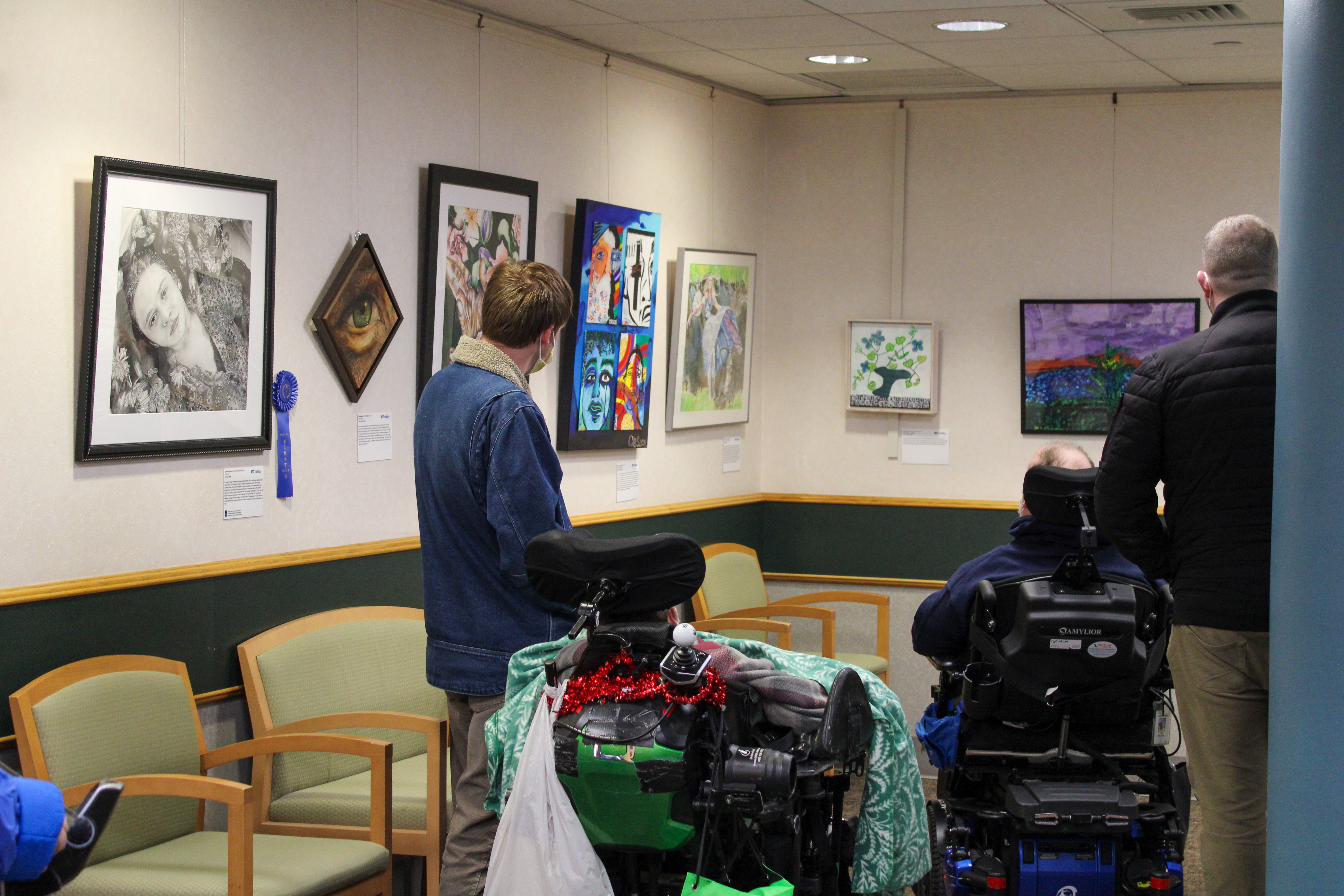
Inglis House residents and staff viewing pieces at Bryn Mawr Rehab’s Art Ability Exhibit
Panner said that for artists who are not local, Bryn Mawr pays the shipping costs for the art.
Along with traditional paintings, they also have digital art and mixed media, photography, fine handmade jewelry, and fine crafts.
There are size limitations, but there is a great deal of variety, such as this year when someone crocheted an umbrella.
So, how important is it for Inglis House residents to be able to have their work shown to the public?
“When you look at prices of art, you don’t see someone’s disability, you don’t see their limitations, you see what’s possible more than anything else,” Tilghman said. “You can’t look at a piece and be able to tell that someone was an amputee or that someone has experienced paralysis or that someone has MS. You just see a beautiful artwork.
Originally reported by mainlinemedianews.com